
Co-produced transformative knowledge to accelerate change for biodiversity
Co-produced transformative knowledge to accelerate change for biodiversity

Journal of Industrial Ecology, June 2026
Yeqing Zhang, Kajwan Rasul, Martin Dorber, Konstantin Stadler, Edgar G. Hertwich, Francesca Verones
Alternative-protein patties are increasingly promoted for their lower environmental footprint, yet their impacts on terrestrial biodiversity remain poorly understood. This study compares conventional beef patties with four alternatives — pea, soy, insect, and mycoprotein across ten selected countries. By integrating input–output models with GLAM Life Cycle Impact Assessment with increased impact pathway coverage, this study quantified terrestrial biodiversity impacts driven by land occupation and climate change embedded in food supply chains. Results show that land occupation dominates, accounting for over 96% of the total terrestrial biodiversity impacts. [...] Read more
Future Foods, Volume 13, June 2026
Rachelle de Vries, Nicole Neufinger, Elizabeth H. Zandstra
A gradual shift from animal-based consumption toward more plant-based diets is crucial for public and planetary health. However, one practical barrier for this protein transition includes the (perceived) financial accessibility of plant-based alternatives. We further explore this tension by examining whether consumers in a large multi-country sample can be reliably distinguished based on their relative willingness to pay for animal- versus plant-based products (WTPΔ) across meat and dairy categories.
[...] Read more
Forest Policy and Economics, Volume 185, April 2026
Jochen Dürr, Thomas Dietz, Jan Börner
Commodity imports by the European Union (EU) are an important driver of land use change in agricultural producer countries. The new EU Deforestation Regulation (EUDR) encompasses seven relevant commodities that can only enter the EU market if they are certified deforestation-free. The EUDR may lead to changes in land use governance and value chain governance of major trading partner countries, which can be described as telecoupling at the policy level. This study develops ‘telecoupling of governance systems’ conceptually and presents a generally applicable framework.
[...] Read more
Environmental Values, March 2026
Elliott Woodhouse
The nature futures framework (NFF) is a tool, adopted by IPBES, used to design scenarios which explicitly trade-off three ways of valuing nature: instrumental, intrinsic, and relational. In its current format, the NFF is depicted as a triangle, with each value perspective occupying the extreme corner node, and a smooth continuum of potential perspectives along each edge.
[...] Read more

Aquaculture, Volume 613, February 2026
David Baptista de Sousa, Ian Vázquez-Rowe, Ramzy Kahhat
The marine ingredients (MIs) industry is essential to the aquaculture sector, mainly providing fishmeal and fish oil to support animal feed and human nutrition. The exponential growth of aquaculture and the heavy reliance on finite marine resources pose significant sustainability challenges and highlight the need for more comprehensive and regionally adapted metrics beyond current Life Cycle Assessment (LCA) indicators and non-conventional LCA metrics.
[...] Read more
Science Advances, Volume 12, February 2026
Flavia Aschi, Stefan C. Dekker, David Leclère, Alexandra Marques, Christian Neumann, Geanderson Ambrosio Detlef P. van Vuuren
Internationally, it has been agreed to halt and reverse biodiversity loss, a commitment partly underpinned by model-based scenario analyses showing that bending the trend is possible. These scenarios provide insights into alternative future biodiversity trends and their drivers. Our meta-analysis differentiates scenarios that project biodiversity loss and that halt or reverse the trend based on their quantitative outcomes and explores their key characteristics such as scenario assumptions, drivers of loss, biodiversity indicators and models used. We found that bending-the-curve studies are scarce, and mostly do no account for climate change, which risks suggesting that the trend can be bent too easily. [...] Read more
Environmental Policy and Governance, Volume 36, December 2025
Daniel Braun, Dennis Abel, Jan Börner
Policy makers can choose among many alternative policy instruments to reduce the impact of EU commodity imports on forests and related biodiversity loss in the world. Changes in the instrument mix affect a wide range of stakeholder groups with varying strategic interests and corresponding policy preferences. Given the significant role of stakeholders in the development and implementation of EU environmental policies, a better understanding of these preferences is needed. We address this knowledge gap by exploring stakeholders' preferences for instruments during the development of the EU Regulation on Deforestation-free Products (EUDR) with a mixed-methods approach.
[...] Read more
Elsevier Journal of Environmental Management, Volume 396, December 2025
Margaux Durand, Leon Bennun, Joshua Berger, Alison Eyres, Koen J.J. Kuipers, Louise Mair, Aafke M. Schipper, Vincent Martinet
Business and finance sector actors have the potential to contribute substantially to bending the curve of biodiversity loss, in the context of a global nature positive agenda. The scope of application of the mitigation hierarchy – avoiding and reducing negative impacts on nature, and compensating for the residual ones – is being extended, from localised impacts to potentially diffuse ones at the level of corporate value-chains, to achieve at least no net loss (NNL) of biodiversity.
[...] Read more

Environmental Research : Food Systems, Volume 2, July 2025
Yeqing Zhang, Kajwan Rasul, Francesca Verones and Edgar Hertwich
Environmentally extended multi-regional input–output (EE-MRIO) models are widely used to address environmental issues in food system studies, but their application in policymaking is challenging because there are differences between the databases. This study compares two prominent EE-MRIO databases, EXIOBASE v3.8.2 and FABIO v1.2, by analyzing the sources of variation in per capita land use footprints of beef consumption, based on average data across six countries from 2015 to 2018.
[...] Read more
Environmental and Sustainability Indicators, Volume 26, June 2025
Koen J.J. Kuipers, Adam Melki, Stephane Morel, Aafke M. Schipper
The potentially disappeared fraction of species (PDF) and the loss in mean species abundance (MSA) are two commonly used indicators to quantify losses in local biodiversity integrity associated with production and consumption of goods and services (biodiversity ‘footprints’). However, it is unclear to what extent these two indicators align.
[...] Read more
PNAS Nexus, Volume 3, December 2024
Kajwan Rasul, Martin Bruckner, Finn Mempel, Stefan Trsek, Edgar G Hertwich
Biomass was the principal energy source in preindustrial societies; their agriculture provided more energy than it required. Thus, the energy return on energy investment (EROEI) needed to be >1. Recent studies have indicated that this may not be the case for modern industrialized agrifood systems (AFSs). Although the green revolution radically improved agricultural yields, it came at the expense of increased energy inputs, mainly in the form of fossil fuels.
[...] Read more
Journal of Industrial Ecology, Volume 3, Octobre 2024
Killian Davin, Maximilian Koslowski, Martin Dorber, Edgar Hertwich
Extending multi-regional input–output (MRIO) models with spatially explicit life cycle impact assessment (LCIA) models allows practitioners to quantify biodiversity impacts at every step of global supply chains. Inconsistencies may be introduced, however, when high-resolution characterization factors (CFs) are aggregated so as to match the low spatial granularity of MRIO models. These aggregation errors are greater when CFs are aggregated via proxies, such as ecoregion land shares, instead of based on spatially explicit elementary stressor flows. Here, we describe our approach to tailoring application-specific CFs for use in MRIO studies.
[...] Read more

Communications Earth & Environment, Volume 5, July 2024
Sven Wunder, Dario Schulz, Javier G. Montoya-Zumaeta, Jan Börner, Gabriel Ponzoni Frey and Bibiana Betancur-Corredor
Reduced emissions from deforestation and forest degradation (REDD+) projects and programmes promise to deliver performance-based, cost-effective climate change mitigation. Fifteen years after its conception, we analysed the rigorous counterfactual-based evidence for environmental and welfare effects from such national and subnational initiatives, along with a Theory of Change. Using machine-learning tools for literature review, we compared 32 quantitative studies including 26 primary forest-related and 12 socioeconomic effect sizes.
[...] Read more
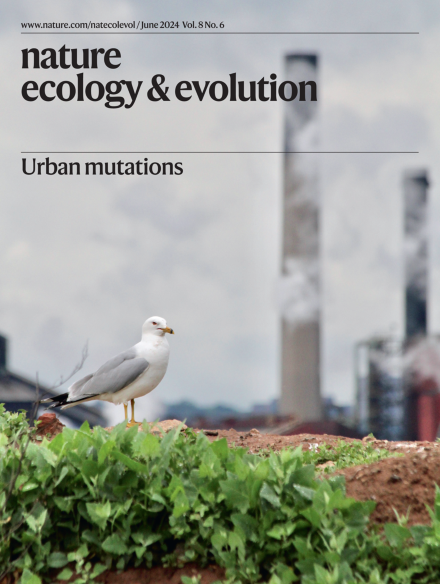
Nature Ecology & Evolution, Volume 9, July 2024
Gustavo M. Oliveira, Rafaella F. Ziegert, Andrea Pacheco, Laila Berning, Metodi Sotirov, Jochen Dürr, Daniel Braun, Felipe S. M. Nunes, Britaldo S. Soares-Filho & Jan Börner
The European Union’s Regulation on Deforestation-free products (Regulation (EU) 2023/1115) (EUDR) aims to reduce the impact of the EU on the world’s forests by imposing mandatory due diligence requirements on forest-risk commodities, such as beef, cocoa, coffee, oil palm, rubber, soy and wood (as well as a number of derived products), starting from 31 December 2024.
[...] Read more